Speakers
Home / Speakers

Keynote Speaker  I


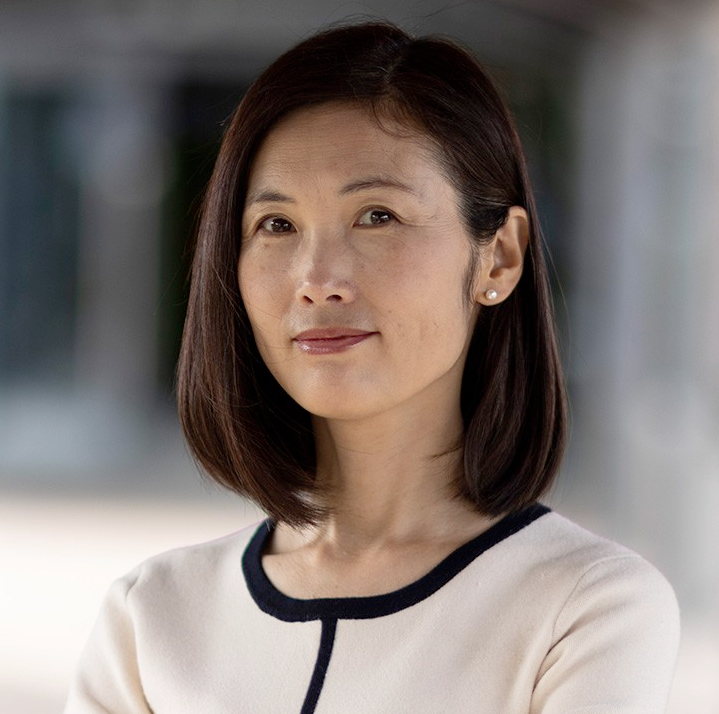
                                                                                                                                      Huai Wang

                                                                                                                       Aalborg University, Denmark

Title: Advances in Reliability of Power Electronic Components and Systems

 Bio:Huai Wang is a Professor at the Department of Energy (AAU Energy), Aalborg University, Denmark. He leads the Reliability of Power Electronic Converters (ReliaPEC) group and chairs the Mission of Digital Transformation and AI at AAU Energy. His research focuses on efficient, reliable, and cognitive power electronic converters. He collaborates with companies across the value chain, from materials and components to systems. Part of the research outcomes have become the underpinning technologies of three start-up companies. Over the past decade, he has initiated five short-term industrial/PhD courses, attended by over 1,000 PhD students and industry engineers. He received his PhD degree from the City University of Hong Kong in 2012 and B.E. degree from Huazhong University of Science and Technology in 2007. He is a member of Danish Academy of Technical Sciences.

Abstract: TBC


Keynote Speaker  II


                                                                                                                          Paul Taylor

                                                                                                 Dynex Semiconductor and CRRC Times Electric

Title: Advancing Renewable Energy Power and Transportation Solutions Through Advances in Power Semiconductor Electronics

Bio: Paul Taylor studied a B.Sc. honours degree in electronic engineering and physics and completed a Ph.D. in compound semiconductor research at Leeds University. He started his industrial career with GEC Marconi as a research engineer in power semiconductor device design and applications. After leading the R&D and product marketing of a range of fast switching products and gate turn off thyristors, he was appointed operations manager responsible for all power device production and engineering and overall business manager for power semiconductor electronic products at Lincoln.

In year 2000 he was one of the founding Officers of Dynex, and subsequently  he was appointed Chief Executive Officer and President of Dynex with listing on the Toronto venture stock exchange and led the business through a growth period increasing turnover from £10M to £24M, and a successful acquisition in 2008 by CRRC Times Electric Co Ltd, Hunan, China.

After stepping down as CEO in 2017 he was appointed Chief Advisor to CRRC Times Electric Co Ltd supporting their international business and technology development, particularly in semiconductor, renewable energy and electric vehicle power electronics, and continues in that position today.  His professional roles include Chairman of Power Electronics UK, Chartered Engineer and a Fellow of the Institute of Engineering and Technology, member of IEEE Power Electronics Society, and Honorary Professor in Electrical and Electronic Engineering at the University of Nottingham.

Abstract: Zhuzhou CRRC Institute is a leader in green energy solutions, focusing on innovative, intelligent, and reliable power generation and transportation technologies. The company excels in R&D, manufacturing, and service, driving advancements in EV transportation and renewable energy system integration. CRRC Zhuzhou's main industrial products include rail transit systems, new energy equipment, EV automotive and industrial equipment founded on a core technology in Power Electronic Converter equipment. Collaboration with its UK subsidiary, Dynex Semiconductor Ltd has led to the introduction of an in house advanced IGBT and Silicon Carbide MOSFET capability that has significantly enhanced the efficiency and reliability of these product solutions. This presentation will illustrate the key power semiconductor product technology developments and discuss the future road map in both silicon and wide band gap semiconductor technology  and its contribution to the development of more efficient energy management and EV transportation solutions.


Keynote Speaker  III


                                                                                                                          Teng Long

                                                                                                                 University of Cambridge

Title: Use Less: Removing Packaging Boundaries to Integrate Power Electronics

Bio: Prof. Teng Long is Professor of Power Electronics in the Department of Engineering at the University of Cambridge, where he leads the Advanced Power Electronics Laboratory (“The Long Group”). He is a Fellow (and Director of Studies) of Peterhouse.  His research spans power electronics and conversion systems for transport electrification (more-electric vehicles in road, rail, marine and aerospace), electrical energy storage, renewable energy and smart grids.  Career milestones at Cambridge include appointment as Lecturer in 2016, promotion to Associate Professor in 2021, and to Full Professor (Power Electronics) in 2022. He established The Long Group within the Electrical Engineering Division.  Before joining Cambridge, he worked at GE Power Conversion, contributing to projects such as a transformer-less all-electric platform supply vessel, the Royal Navy’s Type-45 all-electric warship programme, and an electromagnetic aircraft-catapult demonstrator.

Abstract: Power electronics is ubiquitous in the energy system, nearly 80% of the world’s total electrical power or more than 12 billion kilowatts on average is being processed by power electronics-based power converters in every hour of every day. From renewable energy to power supplies, from transport electrification to smart grids, every Watt is converted and controlled by power converters several times from the end to end. In quest of high performance and sustainability of power electronics, we will demonstrate a new design paradigm for power converter systems by means of structural and functional integration with consideration of circularity at the design stage. We introduce a smart control method which exploits electroluminescence from the semiconductor physics to empower a desirable soft-switching control for a significant increase of efficiency. This smart control is, accurate, robust, self-adaptive, and has EMI immunity. Instead of the linear design process using available components, we will cohesively design novel power electronic and passive component packages oriented from the system requirement. The novel packaging design takes new structures, materials, and fabrication/assembling technologies to advance their performance as well as enable their reusability and recyclability for their ‘another life’ and ‘after-life’. New design concept and deliverables enable reusability, repairability, recyclability of most of parts. In consequence, an unprecedented performance is expected, and the circular power electronics is enabled.


Keynote Speaker  IV


                                                                                                                        Zhengyu Lin

                                                                                                                  Loughborough University

Title: Power Sharing Control of Energy Storage Systems in DC microgrids

Bio: Dr. Zhengyu Lin is Reader in Power Electronics at the Centre for Renewable Energy Systems Technology (CREST) of Loughborough University. His research area includes power electronics and its applications in renewable energies, machine drives, and microgrid based low-carbon energy systems. He was a UK EPSRC Fellow on plug-and-play DC microgrids (EP/S001662), and the coordinator of 3 EU microgrids projects: MSCA-RISE project ‘RDC2MT’, MSCA-IF project ‘PAINTING’, and MSCA-PF project ‘I-CARE’. Before joining Loughborough University, he has worked at Aston University, Sharp Laboratory of Europe and Emerson (Now Nidec) Control Techniques.

Abstract: DC microgrids are small-scale localised power systems that operate in DC form instead of AC, offering higher efficiency and seamless integration of renewable energy and storage. However, achieving accurate power sharing among energy storage units and maintaining stable converter interaction remain key technical challenges.

This keynote presents two control strategy to improve the power sharing accuracy and system stability in DC microgrids. First, in DC microgrids under traditional droop control, mismatched and time-varying line resistances will degrade power-sharing performance, particularly in multi-bus configurations. To address this, an adaptive line resistance estimation and compensation approach is introduced, which accurately estimate and compensate line resistances without additional hardware, ensuring accurate power sharing. Second, the issue of low frequency beat frequency oscillations in parallel-connected converters is introduced, and then a hybrid mitigation strategy, combining separated switching frequency channels and additional line inductors, is proposed to eliminate these oscillations and enhance system reliability.


Keynote Speaker  V


                                                                                                                                                                 Jun Liang

                                                                                                                                                         Cardiff University

Title: Interoperability in HVDC Systems 

Bio: Jun Liang is a Chair Professor at Cardiff University. He has over 30 years’ experience in renewable energy, DC transmission/distribution, power electronic converter control, power system operation and electrified transport. He currently leads a research team in power electronics and DC technologies for renewable power generation and transmission. He has obtained research funding over £22M,including £10M external funding under his portfolio, in 35 projects. He has been the Coordinator and Scientist-in-Charge of three EC FP7/Horizon-2020/Horizon-Europe Marie-Skłodowska-Curie Action ITN/ETN/DN projects (total €13M, 2013-2026). He also leads several major UKRI projects, including UK EPSRC-China NSF project (total £1.1M), UK-Australia, UK-US and UK-Africa projects. He has published over 290 papers including 180 journal papers, 1 book in IEEE/Wiley, and 4 book chapters. He has supervised over 340 PhD students and 15 post-doctoral researchers.


He is an IEEE Fellow and an IET Fellow. He has been the Chair of UK&RI Chapter of IEEE Power Electronics Society, an Organising Committee member of the IET ACDC conferences, CIGRE C6 UK Regular Member, a committee member of CIGRE Working Groups, Committee member of the British Standards Institution (BSI), the Committee member of International Electrotechnical Commission (IEC) SC 8A, an Editorial Board member of CSEE JPES, an Editorial Board member of Energy Internet, and an Associate Editor of IEEE Transaction on Sustainable Energy.

Abstract: With development of HVDC links and multi-terminal HVDC networks, there is a challenges of inter-operation of HVDC converters supplied by different vendors due to the potential competition, concern over technical confidentiality and IP protection, and requirement of their coordinated control operation. This talk will present relevant definitions, history, clarification of understanding, current challenges, potential solutions and future trends of this issue.

0.093307s