
Tutorial I
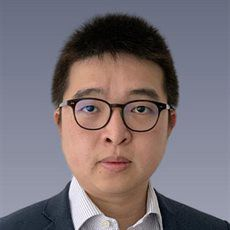
Zhongbei Tian
University of Birmingham, UK
Bio: Dr Zhongbei Tian leads research in transport energy system decarbonisation. His research interests include modelling and analysis of energy systems for rail, road, and maritime transport; smart energy system management and optimisation; and the integration of sustainable transport energy systems with the Smart Grid. He has published more than 100 high-impact papers and has led numerous projects funded by EPSRC, the Royal Society, Horizon 2020, Network Rail, RSSB, and Innovate UK. His research has been deployed internationally, including by Network Rail and Edinburgh Trams in the UK, Madrid Metro in Spain, SMRT in Singapore, and Beijing and Guangzhou Metro in China. He received the prestigious 2016 European Partnership for Railway Energy Settlement Systems (ERESS) Award for Best Energy Efficiency Project for Railways.
Title: From Energy Consumers to Flexibility Providers: Planning Low-Carbon Transport Energy Systems for Resilient Distribution Networks
Abstract: The decarbonisation of transport is transforming distribution networks as electrified road and rail systems evolve from passive energy consumers into active flexibility providers. This presentation explores integrated planning approaches through two UK case studies. The first study investigates integrated energy systems (IESs) for motorway service areas supporting battery electric vehicles (BEVs) and fuel cell electric vehicles (FCEVs). The framework combines transport demand modelling, renewable generation, energy storage, hydrogen infrastructure, and grid reinforcement planning. Traffic uncertainty is addressed using empirical chance constraints and Conditional Value-at-Risk (CVaR). Results show that integrated energy systems can reduce annualised costs by up to 68%, lower carbon emissions, and significantly improve resilience during extreme operating conditions. The second study examines flexible railway traction power supply systems delivering flexibility services to distribution networks under UK Power Networks (UKPN) flexibility products. A two-stage planning framework integrates photovoltaic generation, hybrid energy storage, and robust optimisation using Information Gap Decision Theory (IGDT). The results demonstrate that flexibility value depends strongly on service requirements, traction load characteristics, and storage design. Together, these studies demonstrate how transport energy systems can enhance flexibility, resilience, and decarbonisation while supporting the transition to future low-carbon distribution networks.
Tutorial II

Yumeng Cai
State Key Laboratory of Alternate Electrical Power System with Renewable Energy Sources, North China Electric Power University
Bio: Dr Yumeng Cai was born in 1996. She received the B.Sc. and Ph.D. degrees in electrical engineering from North China Electric Power University, China, in 2018 and 2024, respectively. She was a visiting scholar with the University of Arkansas, Fayetteville, AR, USA, from January to July of 2020 under the supervision of Associate Prof. Zhong Chen. Moreover, she worked as a visiting scholar with KTH Royal Institute of Technology and RISE (The research institute of Sweden) from 2022 to 2023, and her supervisor is Hans-Peter Nee (IEEE Fellow).
She is currently a lecturer with the State Key Laboratory of Alternate Electrical Power System with Renewable Energy Sources, North China Electric Power University. Her main research interests include characteristics, gate driver and reliability of high power electronic devices. She has led one National Natural Science Foundation of China (NSFC) Youth Fund Category C project, and participated in one EU Horizon 2020 project and several other projects. She has published over 40 journal papers and received awards including outstanding doctoral thesis and outstanding doctoral graduate. Contact: 010-61771645, caiyumeng@ncepu.edu.cn.
Title: Characterization and Assessment Methods of Gate Oxide Reliability for Silicon Carbide MOSFETs
Abstract: Limited by materials and manufacturing processes, SiC MOSFETs suffer from high defect density in the SiC/SiO2 interface, leading to poor gate oxide reliability and hindering long-term reliable application. This report focuses on the gate oxide reliability issue of SiC MOSFETs, systematically conducting research on degradation characterization and evaluation methods. For gate oxide degradation characterization, a split-gate capacitance method for locating gate oxide degradation sites is proposed, an equivalent circuit model of the split-gate capacitance is established, and a method for extracting the evolution of interface traps at different locations is proposed. A high-temperature gate bias automated measurement system integrating split-gate capacitance characteristic measurement is developed, and a semiconductor physics simulation model under high-temperature gate bias is established, revealing the influence mechanism of trap types and energy level positions on the degradation at different gate oxide locations under different operating conditions. To develop an effective method for evaluating gate oxide reliability, an experimental platform for a DC-DC buck converter with constant temperature, current flow, and continuous switching operation is developed and the gate oxide degradation under this operating condition is evaluated. Moreover, the gate oxide degradation results of the DC-DC buck converter and under high temperature AC gate bias conditions are compared and analyzed. The results revealed that the dynamic drain-source voltage and load current in actual operation have an impact on the gate oxide degradation of the device, and the impact varies at different locations. Finally, an experimental method for evaluating gate oxide reliability under actual operating conditions is proposed.